
How to Choose a Kids' Bike in the UAE: Height, Age, Weight and Size
Buying a children's bicycle one size bigger can feel economical: the child will grow, so why not make the purchase last? The problem is that the first few rides are when a young cyclist most needs control. If reaching the ground, steering or pulling a brake lever is difficult, extra growing room is not much of a benefit.
For parents in the UAE, a good starting point is the child's current height and riding ability, followed by how the bicycle actually fits. Age labels and wheel sizes are useful for shortlisting, but neither can tell the whole story.
Measure the child before comparing models
Record the child's height without shoes. If possible, measure inseam too: have them stand against a wall with feet slightly apart and measure from the floor to the crotch. This helps you judge how confidently they can stand over the frame and reach the ground from the saddle.
Use the manufacturer's height range as the first filter. Then check the frame's standover clearance, minimum saddle height and reach to the handlebars. Two 16-inch bicycles can fit differently because their frames and cockpits are not identical. Even siblings of the same age can need different sizes.
ElectraBike's kids' bike collection is organised by age and wheel size, but individual product cards also include fit information. For example, the Spinn Pixie 16-inch lists a rider-height range of 91–117 cm, while the woom GO 3 16-inch lists 103–120 cm. Both have 16-inch wheels, yet the recommended ranges differ. That is precisely why wheel size alone is not enough.
Start with the skill, not just the birthday
A child who is still learning to balance has different needs from one who confidently pedals, brakes and corners. For a complete beginner, a suitable balance bike may be a better first step than a pedal bike with complex controls. If the child is ready for pedals, prioritise an easy-to-control frame and accessible brakes.
When moving to a larger bicycle, do not assume the child will immediately adapt. Give them time to practise starts, stops and turns in a safe, traffic-free space. Parents should also check that the rider understands how that particular bicycle brakes; a model with a coaster brake operates differently from one with hand brakes.
Weight matters — but so does the whole fit
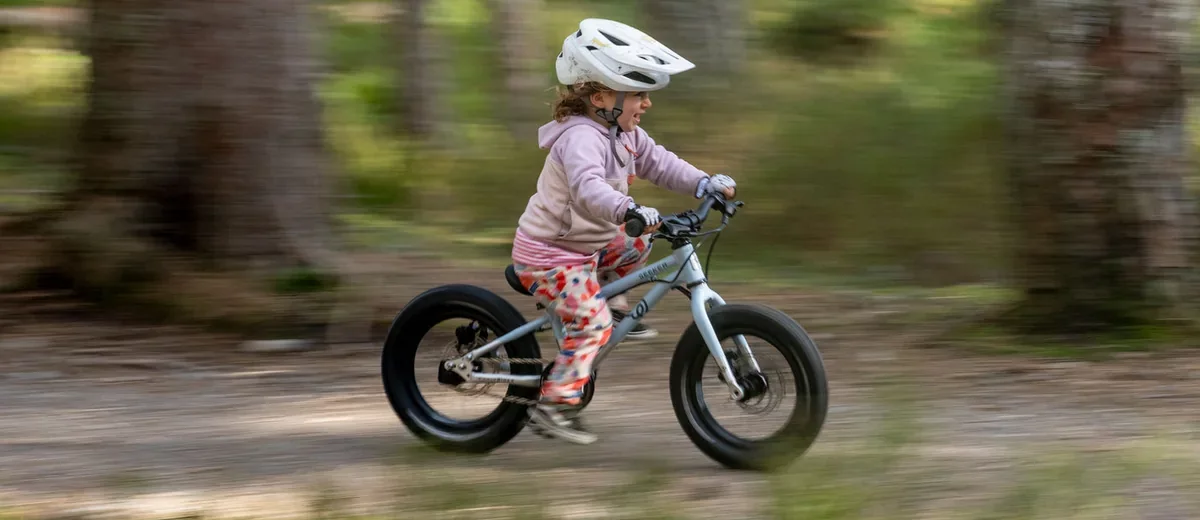
A heavy bike asks more of a small rider, particularly when starting, steering slowly or picking the bike up after a fall. That is one reason lightweight children's bikes attract attention. Yet the lightest bicycle is not necessarily the right one: a frame that is too long or handlebars that are hard to reach can undermine the benefit.
For a concrete comparison, ElectraBike lists the woom GO 3 16-inch at 5.4 kg. The Early Rider Belter 20-inch is listed at 8 kg without pedals and uses an aluminium frame and belt drive. These are different-size bikes for different riders, so the figures should not be interpreted as a direct contest. They do show what to check in an individual specification sheet.
Ask whether the stated weight includes pedals and accessories. A basket, heavy kickstand or training wheels can change the experience of a small cyclist.
Check the brakes with small hands
Brake reach is easy to overlook when a bicycle looks attractive in the showroom. Have the child put their hands in a normal riding position. Can they pull the levers comfortably without releasing their grip or twisting their wrists? Is the braking action predictable?
The woom GO 3 uses child-specific handbrake levers and a colour-coded rear brake lever. The Early Rider Belter 20 also provides adjustable brake-lever reach. These details matter because children need controls they can use reliably — not just features that look impressive on a specification list.

Frame geometry and riding position
Watch the child from the side. Arms should not be fully stretched, shoulders should look relaxed and the rider should be able to steer without shifting their whole body. The saddle should be adjusted for the child's stage of learning: beginners may need a more reassuring ability to put their feet down, while confident riders can use an efficient pedalling position within the manufacturer's guidance.
Avoid choosing only by a bike's appearance or its designation as a “boys'” or “girls'” model. Fit, handling and the child's preferences are more useful criteria than gendered labels.
Choosing between Spinn, woom and Early Rider
The Spinn Pixie range is worth exploring for straightforward, child-friendly bicycles in familiar wheel sizes. The brand's 16- and 20-inch versions do not have identical fit ranges, so treat them as separate options.
Woom children's bikes place emphasis on weight and child-specific contact points. The GO 3's size and brake details make it a useful benchmark when assessing first pedal bikes.
Early Rider offers designs such as the Belter 20, whose belt drive and internal gearing can appeal to families who value low-maintenance components. That does not mean every Early Rider model has the same drivetrain; always compare the actual specification.
Five questions to ask before you buy
- Is the child's present height within this exact model's stated fit range?
- Can they start, stop, turn and use the brakes comfortably?
- Is the bicycle manageable for them to move and handle?
- Does it suit the surfaces and distances they will actually ride?
- Can the saddle and controls be adjusted as they grow, without compromising fit now?
A better first ride in Dubai
For the first few sessions, choose a quiet, flat, traffic-free area and ride when temperatures are comfortable. Bring water, use a correctly fitted helmet and keep sessions short enough to finish on a positive note. A child who feels in control is more likely to want to ride again.
If you are deciding between two sizes, bring your child's height details to ElectraBike or arrange a suitable test ride. A well-fitting bicycle today is more valuable than a theoretically longer-lasting one that feels awkward from the start.


